Things We Don’t Do at Sabre: #5 Pretending BJJ Is a Complete Self-Defence System
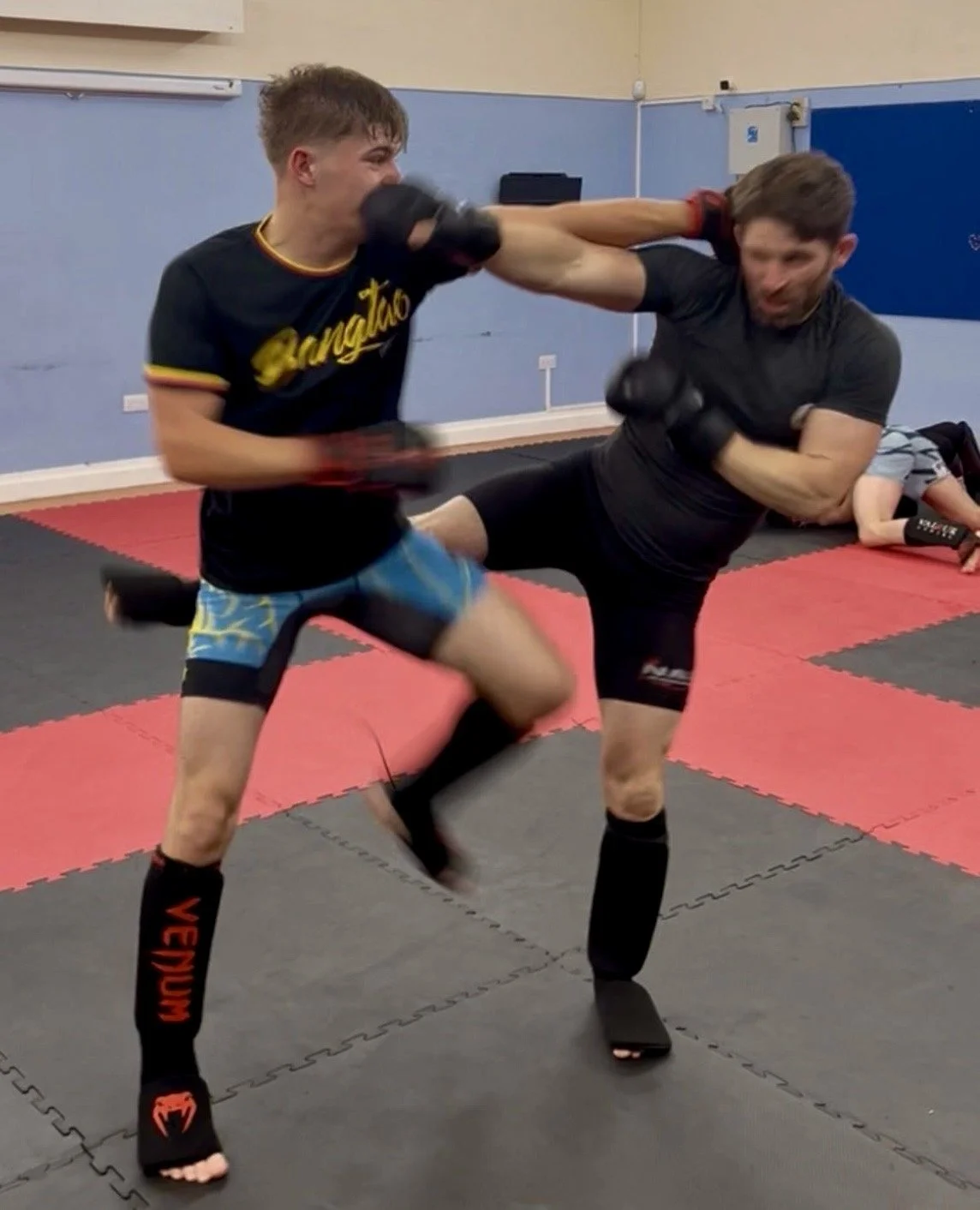
BJJ is not a complete self-defence system.
There. I’ve said it.
I actually think BJJ is extremely useful for self-defence. It teaches you how to grapple, control another person, escape bad positions and remain calm while someone is trying very hard to make you uncomfortable. Those are valuable skills. But useful and complete are two very different things.
One of the things that frustrates me about some BJJ schools is the way they present BJJ as if learning to grapple is equivalent to learning to fight. It isn’t. This is particularly frustrating when the instructor has never seriously trained in another martial art, especially a striking art. If you’ve spent your entire martial arts career doing BJJ, you can become extremely knowledgeable about BJJ. You can become an outstanding instructor. You can become a world-class grappler. But how much do you really know about fighting? What happens when the person you’re trying to grapple is trying to punch you? What happens when there are two people? What happens when there’s a weapon? What happens when the fight takes place on concrete rather than a nice sprung mat?
These aren’t criticisms of BJJ. They’re questions about context.
Take guard pulling. In a BJJ competition, pulling guard can be an entirely sensible tactical decision. You voluntarily put yourself on the ground because the rules allow it and because you’re trying to win a grappling contest. In a car park at night, deliberately putting yourself on the floor with an unknown attacker is a very different proposition. The same applies to leg locks. Heel hooks are fantastic BJJ techniques. They’re among my favourite submissions. But if someone attacks you in the street, your primary objective probably shouldn’t be to sit down and engage their legs.
The danger isn’t necessarily that these techniques don’t work. The danger is that training them in one context can create habits that are inappropriate in another context, particularly if an instructor tells students that those habits have prepared them for self-defence.
And there’s a very recent example that brings this into sharp focus. A black belt competing in an absolute division in Brazil suffered a devastating cervical injury after being lifted and driven head-first into the mat. The technique was illegal, the referee immediately stopped the match, and the athlete subsequently underwent major spinal surgery. I don’t want to turn somebody else’s tragedy into a marketing opportunity for Sabre, and I have no interest in speculating about his recovery. But the incident does illustrate something important.
Imagine the same basic position outside the gym. You’ve got a triangle on an attacker. You’re reaching underneath their legs. They stand up and lift you. In BJJ, your instinct may be to hold on and finish the submission. In competition, there are rules designed to prevent someone from simply driving you head-first into the floor. In a car park, there aren’t. The problem isn’t that the triangle doesn’t work. It clearly does. The problem is that a sport technique can create a sport-specific instinct.
The same is true of guard pulling, accepting bottom position, deliberately engaging in leg attacks and many other things that can be completely rational decisions in a BJJ match. The rules matter. The environment matters. The presence of a referee matters. The fact that you’re fighting one person matters. And the fact that nobody is trying to punch you in the head matters rather a lot.
This becomes particularly important when BJJ is marketed to women as a self-defence solution. BJJ genuinely has things to offer someone who may be physically smaller or weaker than an attacker. The ability to grapple, control position, escape and submit a larger opponent is valuable. But that makes it even more important not to create false confidence. If I tell someone, “You train BJJ, so you’ll be able to defend yourself,” I’m making a much bigger claim than, “BJJ will give you some useful skills if you ever find yourself in a violent situation.” Those aren’t the same thing.
I’ve trained in BJJ, kickboxing, MMA and JKD. I’m not claiming that makes me an expert in every aspect of self-defence. Far from it. But cross-training has taught me something important: how much I don’t know. A grappler who has never trained striking doesn’t know what their grappling looks like when someone is actively trying to punch them. A striker who has never grappled doesn’t know what their striking looks like when someone gets hold of them. MMA is valuable because it forces you to confront those gaps.
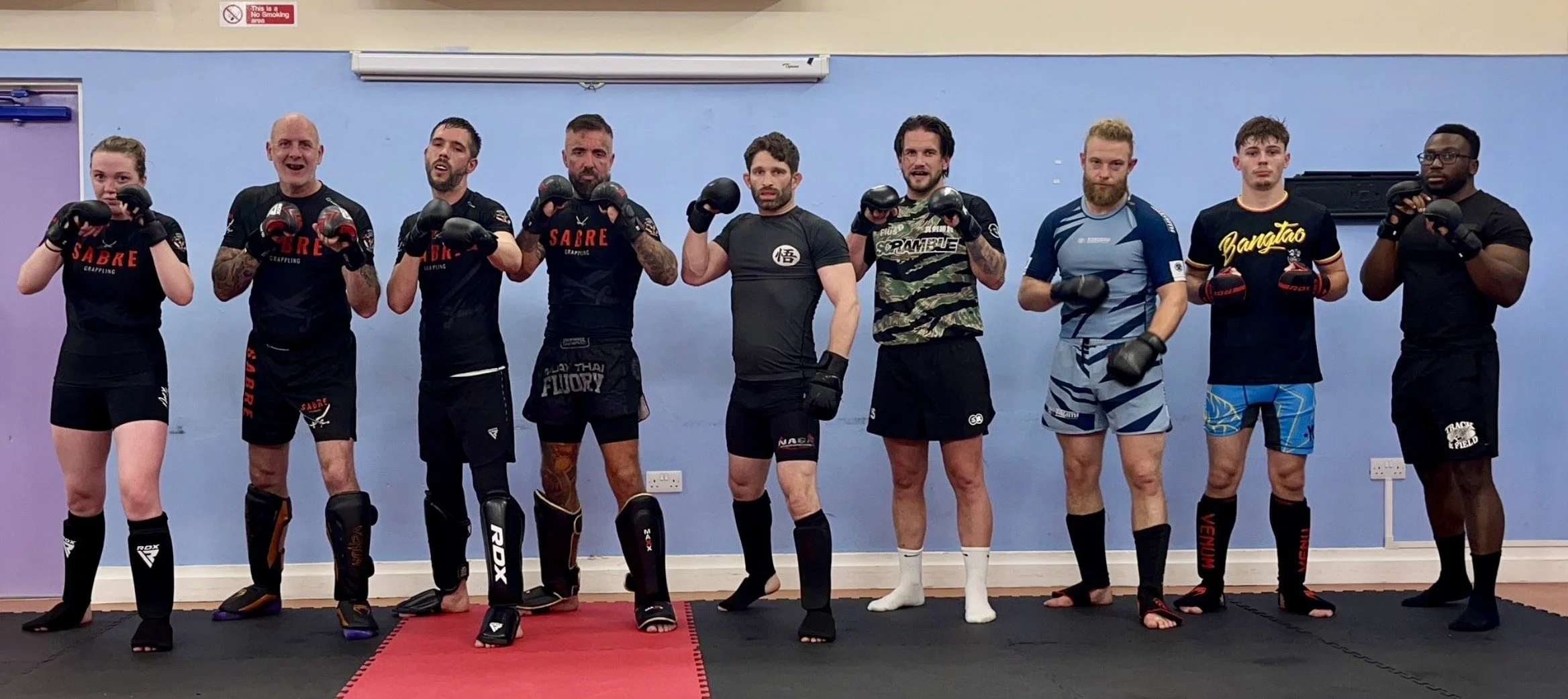
That’s also why we offer MMA at Sabre. Not because I think everyone needs to become an MMA fighter, and not because I think BJJ is somehow inadequate. MMA gives our students the opportunity to discover what their BJJ looks like when the other person can punch them. It forces you to deal with distance, striking, takedowns, clinching and grappling. Your BJJ has to work when someone is trying to hit you, and your striking has to work when someone is trying to grab you.
MMA isn’t a complete self-defence system either. It has rules, sporting conventions and limitations of its own. But it’s a much better laboratory for understanding how different parts of fighting interact.
Bruce Lee had a phrase that I think captures this beautifully:
“There is no such thing as an effective segment of a totality.”
The idea is central to Lee’s philosophy of martial arts. Fighting is a totality. Distance matters. Striking matters. Wrestling matters. Grappling matters. The environment matters. Awareness matters. Weapons matter. Multiple attackers matter. Avoidance matters. BJJ is one segment of that totality. An incredibly useful segment, but still a segment.
At Sabre, I’m teaching BJJ. If you want to learn BJJ, we’ll teach you BJJ. If you want to compete, we’ll help you compete. And if the skills you learn here ever help you defend yourself, that’s a welcome consequence. But I’m never going to tell you that because you’ve earned a BJJ black belt, you’re now prepared for every possible violent encounter.
That’s not confidence.
That’s false confidence.
And false confidence in a dangerous situation can be much worse than knowing what you don’t know.
BJJ is brilliant.
It just isn’t everything.
